Publication Highlights

A selection of recent work from the lab on sleep, circadian rhythms, daytime napping, and physiological signals in aging. For everything we have published or presented, start here:

Journal of the American Heart Association 2025

Reduced Complexity of Pulse Rate Is Associated With Faster Cognitive Decline in Older Adults

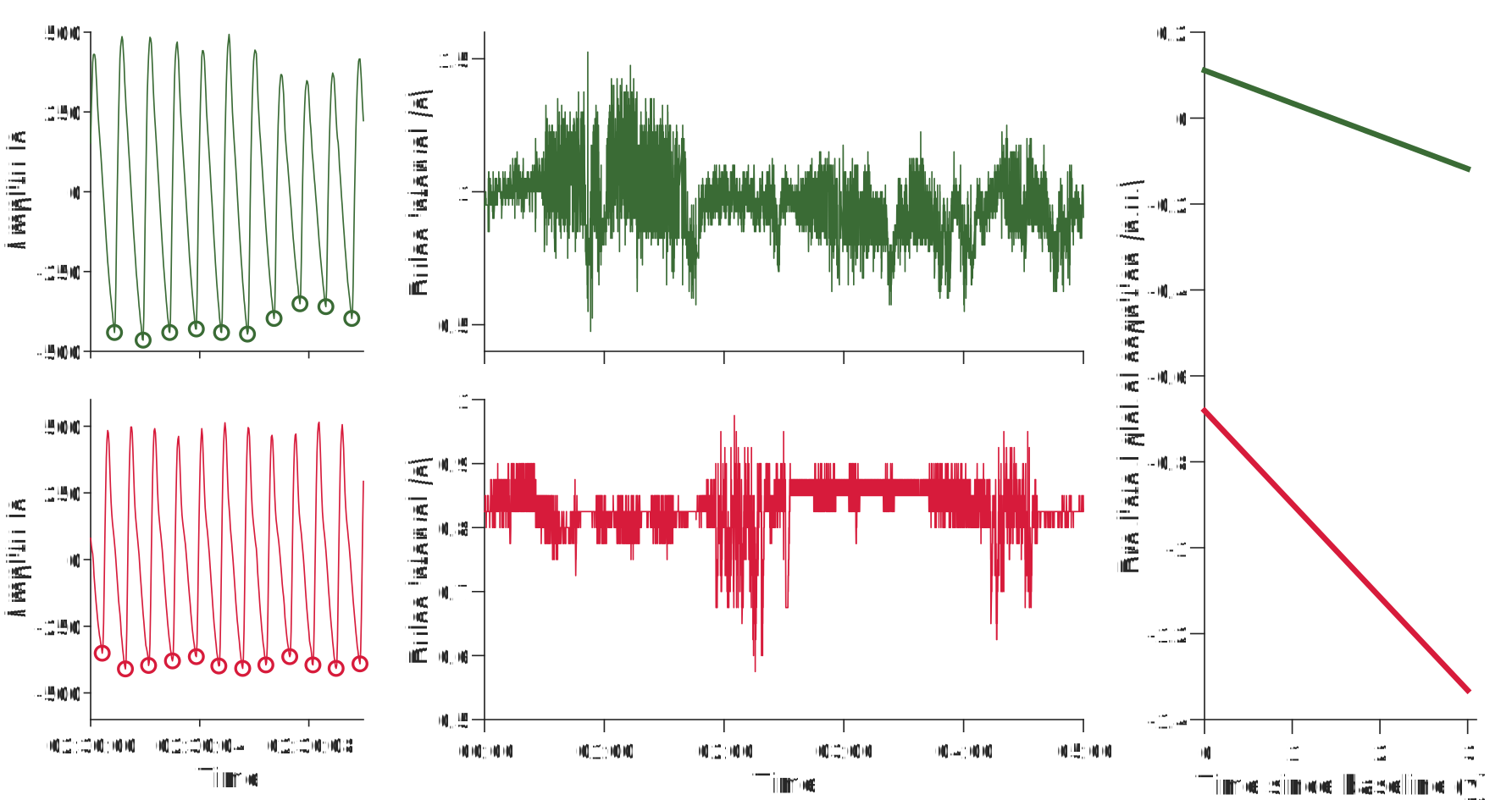
In this large longitudinal study of over 500 community-dwelling older adults, our team examined whether the complexity of pulse rate -- measured using a novel nonlinear approach called distribution entropy -- is linked to cognitive decline. We found that lower pulse rate complexity, potentially reflecting dysregulated cardiac autonomic function, was significantly associated with faster decline in global cognitive performance over time. Notably, this nonlinear measure outperformed conventional heart rate variability metrics in predicting cognitive changes. These findings highlight the promise of digital health tools and wearable sensors in identifying early risk markers for dementia and other neurodegenerative diseases.

C Gao, A Lim, S Haghayegh, R Cai, J Yang, L Yu, A Ibanez, AS Buchman, DA Bennett, L Gao, K Hu, P Li

Nature Communications 2023

Circadian disturbances and frailty risk in older adults

Frailty is characterized by diminished resilience to stressor events, and frail older people have increased risks for major health consequences. We found that lower strength, reduced stability, or increased variation of circadian rest-activity rhythms were associated with a higher risk of incident frailty and faster progress of frailty over time. Perturbed circadian rest-activity rhythms may be an early sign or risk factor for frailty in older adults.

R Cai, L Gao, C Gao, L Yu, X Zheng, DA Bennett, AS Buchman, K Hu, P Li

Annals of Neurology 2023

Circadian Rest–Activity Rhythms, Delirium Risk, and Progression to Dementia

Delirium is a complex neurocognitive syndrome suspected to be bidirectionally linked to dementia. We found that 24-hour daily suppression in rest activity rhythms, fragmentated rhythms, and potentially delayed acrophase were associated with delirium risk. Subsequent progression to dementia was more likely in delirium cases with suppressed rhythms. The presence of disturbances in rest-activity rhythms before delirium and prior to progression to dementia suggests that these disturbances may predict higher risk and be involved in early disease pathogenesis.

L Gao*, P Li*, N Gaykova, X Zheng, C Gao, JM Lane, R Saxena, FAJL Scheer, MK Rutter, O Akeju, K Hu

Journal of Sport and Health Science 2023

Heart rate response and recovery during exercise predict future delirium risk—A prospective cohort study in middle- to older-aged adults

Heart rate response/recovery (HRR) to submaximal exercise predicted future delirium risk during hospitalization. Lowest quartile for a HRR index was equivalent to the risk of being 6 years older, a current smoker, or having 3 or more additional cardiovascular risks compared to those in the highest quartile. Given that HRR is potentially modifiable, our results demonstrate that it may be useful for neurological risk stratification alongside traditional cardiovascular risk factors.

L Gao, A Gaba, P Li, R Saxena, FAJL Scheer, O Akeju, MK Rutter, K Hu

Alzheimer's & Dementia: The Journal of the Alzheimer's Association 2023

Daytime napping and Alzheimer’s dementia: A potential bidirectional relationship

Daytime napping was assessed objectively through actigraphy annually for up to 14 years. Daytime napping was modeled longitudinally with aging and Alzheimer’s progression. Our findings suggested that progression of Alzheimer’s dementia accelerated the aging-related changes in daytime napping. Our results also for the first time demonstrated directly that daytime napping and cognitionmay drive each other’s changes bidirectionally.

P Li, L Gao, L Yu, X Zheng, MC Ulsa, HW Yang, A Gaba, K Yaffe, DA Bennett, AS Buchman, K Hu, Y Leng

The Lancet Healthy Longevity 2020

Circadian disturbances in Alzheimer's disease progression: a prospective observational cohort study of community-based older adults

Our longitudinal study ascertained within-person changes in circadian rhythmicity of spontaneous motor activity in more than 1000 older adults that were accelerated by Alzheimer's progression. We also showed that lower strength and higher variability of circadian rest activity rhythms predicted a higher risk of developing Alzheimer's dementia in future. Our findings imply either a bidirectional relation or shared common underlying pathophysiological mechanisms between circadian dysregulation and Alzheimer's progression.

P Li, L Gao, A Gaba, L Yu, L Cui, W Fan, ASP Lim, DA Bennett, AS Buchman, K Hu

Looking for something else?

These are only highlights. The full lists cover every paper and talk.